WordPressServerlys team5 min read
WordPress 7.1.3 is out: update now, then get ready for 7.2

Summarize with:
WordPress 7.1.3 fixes seven security issues and should be installed today. Here is how to check your site took it, and what to test before WordPress 7.2 lands on December 8.
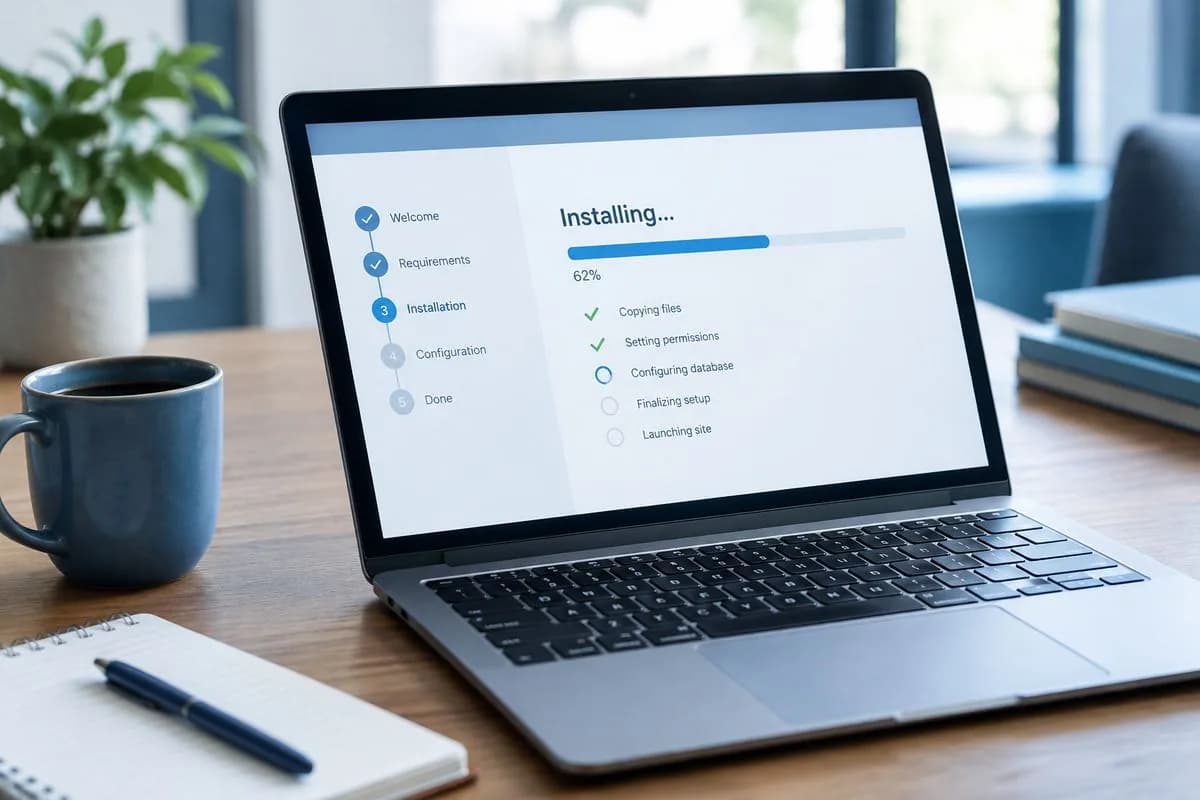
On October 6, WordPress released version 7.1.3, a maintenance and security release with seven security fixes and four bug fixes. The WordPress team's advice in the release announcement is short: update your sites immediately. It was the third security release in about a month, after 7.1.1 and 7.1.2.
At the same time, WordPress 7.2, the last major release planned for 2026, is about to enter beta. This guide covers both: how to make sure the security update actually reached your site, and what to check before 7.2 arrives so the upgrade is uneventful.
What WordPress 7.1.3 fixes
The release notes list seven security issues, reported by independent researchers, security firms and the WordPress security team itself:
- Stored cross-site scripting (XSS) on the Comments admin screen, which could be triggered through a pending comment.
- A second-order SQL injection in the WordPress export (WXR) feature.
- Disclosure of comments on private and unpublished posts to visitors who were not logged in.
- XSS in Imgur embeds.
- A denial-of-service issue in the function WordPress uses to turn relative links into full URLs.
- Users with the Author role could make posts sticky, which should be an Editor's decision.
- Forgeable hook parameters that could cause one action to be mistaken for another.
None of these needs a dramatic response, but the first three are the kind attackers look for: a comment form is open to the whole internet, and private posts are private for a reason. The fix is to be on 7.1.3, nothing more.
How to check your site is updated
Most WordPress sites install minor security releases automatically in the background. Most is not all. Hosts, security plugins and a single line in wp-config.php can switch automatic updates off, so check rather than assume:
- Log in to your dashboard and open Dashboard → Updates. The top of the page tells you which version you are running. If it says anything below 7.1.3, click Update Now.
- Look for
AUTOMATIC_UPDATER_DISABLEDorWP_AUTO_UPDATE_COREset tofalseinwp-config.php. Either one stops security releases installing on their own. - If you look after several sites, the WP-CLI command
wp core versionanswers the question in seconds, andwp core updateapplies the update. - Take a backup first if your site has not been backed up in the last day. A minor release rarely breaks anything, but a backup makes rarely a non-event. Our backup tutorial covers the options.
Updating WordPress itself is half the job. Most WordPress compromises start with an out-of-date plugin, not core. While you are on the Updates screen, update plugins and themes too, and delete any you no longer use. Our WordPress security guide covers the rest of the list.
WordPress 7.2: the dates
According to the WordPress developer blog, the 7.2 release runs to this schedule:
| Milestone | Date | What it means for you |
|---|---|---|
| Beta 1 | October 20, 2026 | Test your plugins and theme on a copy of your site |
| Release candidate 1 | November 17, 2026 | Features are frozen; last chance to report breakage |
| Final release | December 8, 2026 | Update your live site once your staging copy passes |
What is coming in WordPress 7.2
A roadmap is a plan, not a promise, and the WordPress team says plainly that not every item will make the final release. These are the changes that matter most to site owners:
- A new default theme, Ipsum. It is also the end of year-named default themes. Future defaults will be named, so they can change when the design needs it rather than every year.
- Safer Application Passwords (planned): an email when a new one is added to your account and detection of non-HTTPS use. Application Passwords let apps and services log in to your site, so being told when one appears is a real security gain.
- Editor additions, including text shadow as a block style, a grid variation of the Gallery block with columns per screen size, and redrawn icons.
- A Secrets API (tentative), available only through WP-CLI in 7.2, with an interface planned later.
Two changes under the hood are worth knowing about if you have a developer, because they are the most likely to surprise an older site:
- `NO_BACKSLASH_ESCAPES` is off by default. This is a database setting. Sites that depend on it can turn it back on with a
db.phpdrop-in, not a plugin. - `wp_kses()` is being rebuilt on the HTML API (targeting 7.2 or 7.3). This is the function that cleans HTML in posts and comments. The new version normalises output and rejects some malformed markup, and a
wp_kses_force_legacy_parserfilter restores the old behaviour while code is updated.
Themes that style the Gallery block or WordPress's built-in icons with custom CSS should be checked too, because both are changing shape.
How to test 7.2 without risking your live site
Never run a beta on the site that takes your bookings or orders. Make a copy and test there:
- Create a staging site, an exact private copy of your live one. Our guide to setting up a WordPress staging site walks through it.
- Install the WordPress Beta Tester plugin on the staging copy and choose the beta or release candidate channel.
- Click through the pages that earn you money: the home page, a service or product page, the contact form, the basket and checkout if you sell online.
- Open the editor and change something. Editor changes are where 7.2 is busiest, so check the blocks you actually use.
- If something breaks, tell the plugin or theme author with the version and steps. During the beta there is still time for them, or WordPress, to fix it.
The WordPress sites that break on update day are the ones nobody looked at during the beta.
Where Serverlys can help
If you would rather not track release schedules at all, this is what our WordPress plans are built around:
| If you need… | Start with | From |
|---|---|---|
| Hosting where WordPress updates, daily backups and free SSL are handled for you | WordPress hosting | $7.95/mo, renews at $12.62/mo |
| Someone to apply WordPress, plugin and theme updates for you every month, with daily backups and uptime alerts | ServerCare Essential | $149.95/mo |
| A site stuck on an old version moved to a current, supported setup | Free migration | Free with hosting |

The author
Serverlys team
The people who run Serverlys hosting, domains and support. We write about what we see every day helping small businesses keep their websites fast, safe and online.
More from Serverlys team